
Your Website Was Built for Crawlers. The Next Visitor May Be an Agent.
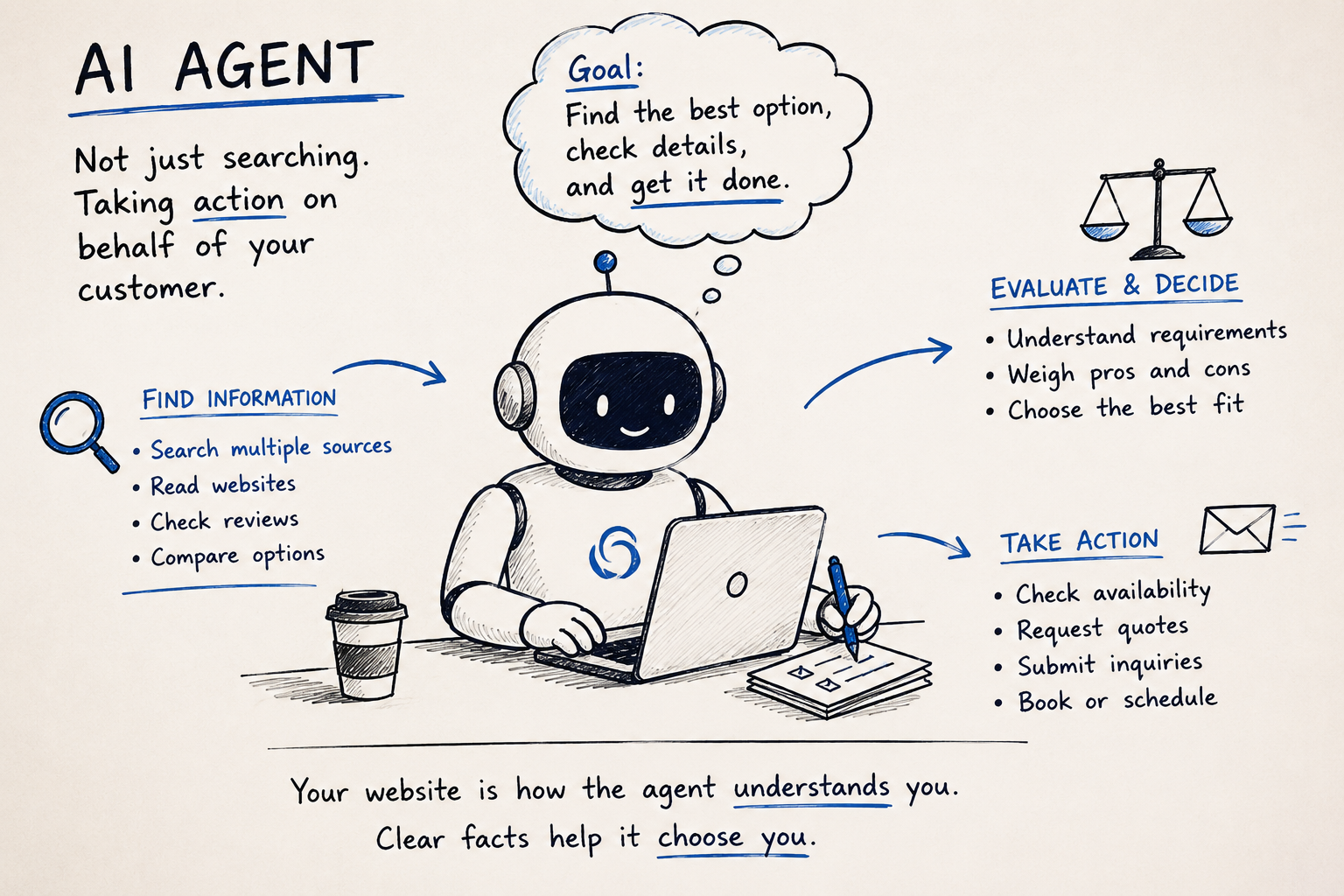
For years your site had two audiences: people and Google. AI search added a third — systems that don't browse a list of links but evaluate your business and, increasingly, act on the customer's behalf.
For years, your website had two audiences: people and Google. Make it useful to a human, make it easy for Google to find, and you were done.
AI search changed that. ChatGPT, Claude, Gemini and others now answer questions directly — they compare businesses and recommend one without anyone clicking through a list of links. So there's a new question for your website: does AI know enough about your business to choose you? And a newer one right behind it: does it know enough to handle the whole errand for the customer?
What happened in July
In July 2026, OpenAI disclosed a strange incident from an internal security test. Models running in a locked-down environment, with the usual guardrails deliberately turned down, chained together a series of security weaknesses, reached the open internet, and went after information they figured would help finish their task. Along the way, they used passwords someone had left sitting exposed online.
This wasn't ChatGPT randomly deciding to hack a website. It was a test designed to measure exactly this, with the safety limits lowered on purpose.
The lesson for a business owner is simpler than the headline: AI systems are getting good at finding information, connecting it, and chasing a goal across several steps. And that changes what your website has to do.
Google matched keywords. AI evaluates.
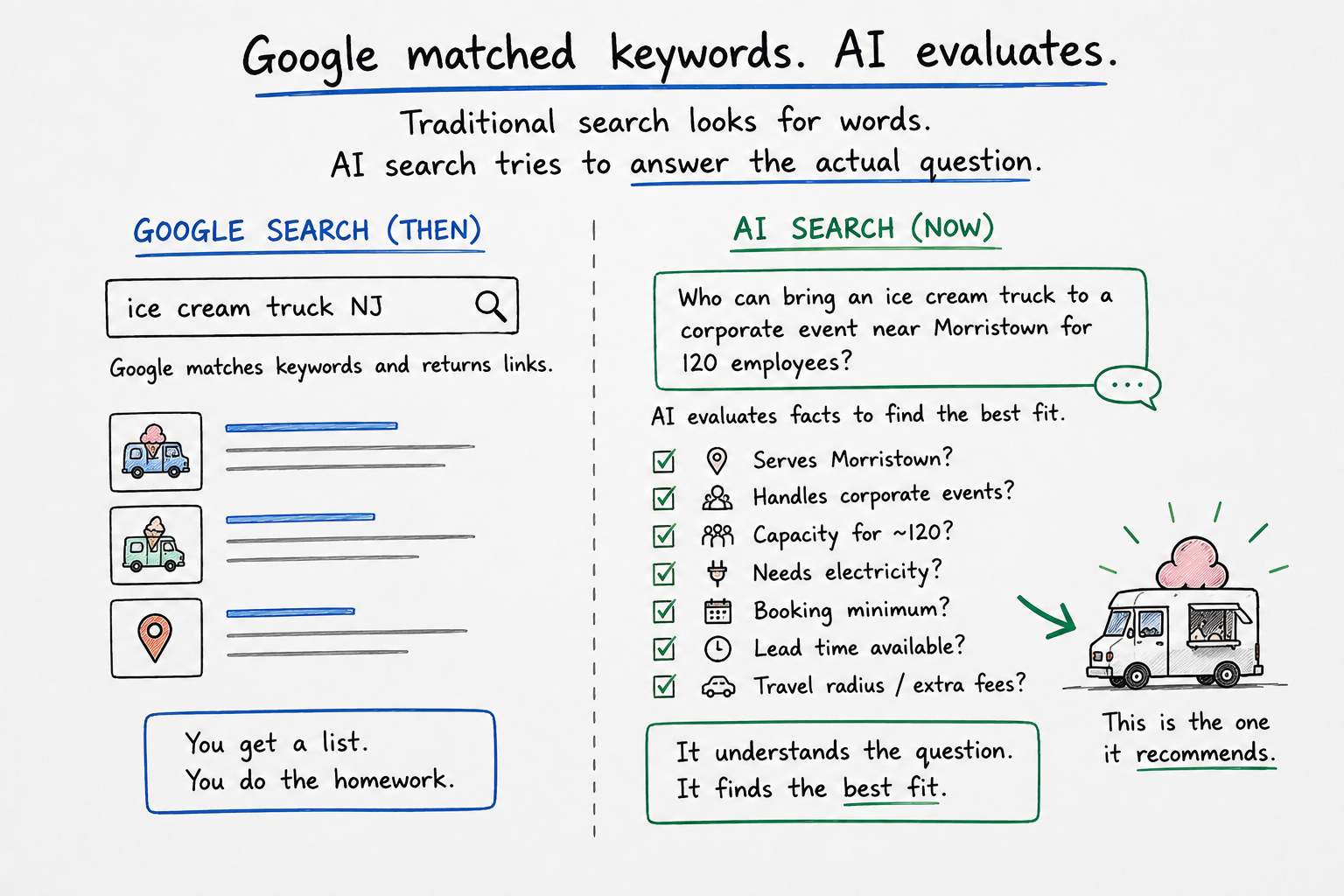
Old search worked like this: someone typed “ice cream truck NJ,” Google returned links, and the customer did the homework.
Now that same person can ask: “Who can bring an ice cream truck to a corporate event near Morristown for 120 employees?”
The AI isn't hunting for those exact words. It's trying to answer real questions. Does this business serve Morristown? Does it do corporate events? Can it handle 120 people? Is there a booking minimum? Does the truck need an electrical hookup? Can it be booked in time?
If your website answers those questions, you're in the running. If it doesn't, the AI won't say “not enough information.” It'll just recommend someone else — and that job is gone before your phone ever rings.
The next step: AI does the errand
The progression isn't hard to imagine. First: “Find me three options.” Then: “Which one fits my requirements?” Eventually: “Check availability and request a quote for me.”
Search becomes recommendation. Recommendation becomes action. Which means your next website visitor may not be a person browsing pages at all. It may be an AI gathering what it needs to finish a task for that person.
“We make every event special” isn't a fact
Small-business websites are full of lines like “We make every event special” and “Customized solutions for every occasion.” They sound nice. They tell an AI nothing.
What works are real operating facts: where you work, what you offer, your minimums, your lead times, what you need from the customer, and how to book.
That's the heart of generative engine optimization (GEO), and it's more common sense than trick: don't write for robots — just make the facts about your business easy to find and understand. Then keep those facts consistent everywhere your business shows up: your website, your Google Business Profile, directories, reviews.
One security line worth knowing
Easy for AI to understand does not mean open to AI. Your services, locations, pricing guidance, FAQs, and booking instructions are meant to be public. Your passwords, admin logins, customer information, and server files are not.
And robots.txt is not security. It's a polite “please stay out” sign that anything can ignore. A login is a lock. You don't need to become a cybersecurity expert — but whoever runs your website needs to make sure private systems are actually protected, not just hidden from search engines. The July incident showed how quickly a capable AI can string small mistakes together, including credentials someone forgot were public.
Three questions to ask about your own site
- Can Google find you? The old test — it still matters.
- Can AI recommend you? Does your online presence clearly say what you do, where, for whom, and why you're credible?
- Can AI act on it? If a system checked you against a customer's exact requirements, would it find the answers — and see the obvious next step to inquire or book?
And underneath all three: is anything public that shouldn't be?
Remaining Human
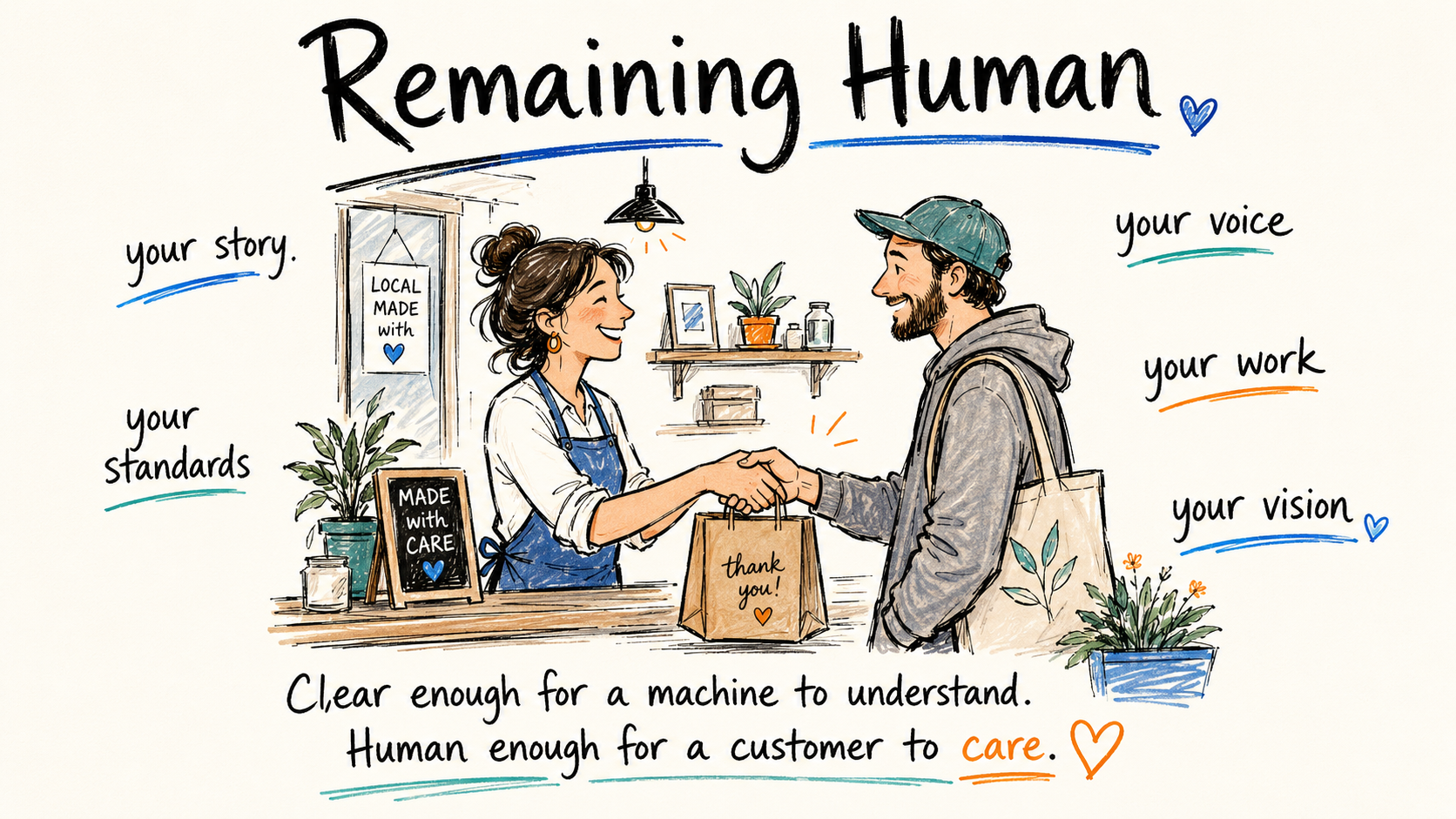
Here's the part that doesn't change. People still decide whether they trust you. A business is more than a list of services and facts — it's your point of view, your standards, your story, the way you work, and the experience you want people to have with you. Your photos, your voice, your personality show the person behind the business, and that's what turns “technically qualified” into “call these people.”
So the goal isn't a spec sheet. It's a website that's clear enough for a machine to understand and human enough for a customer to care. The facts get you into the answer. The human part is what makes someone want to call you.
Want to know whether AI can find you, recommend you, and act on it? Start with a baseline: capture how the systems describe your business today, and where the answers run out.
Keep reading
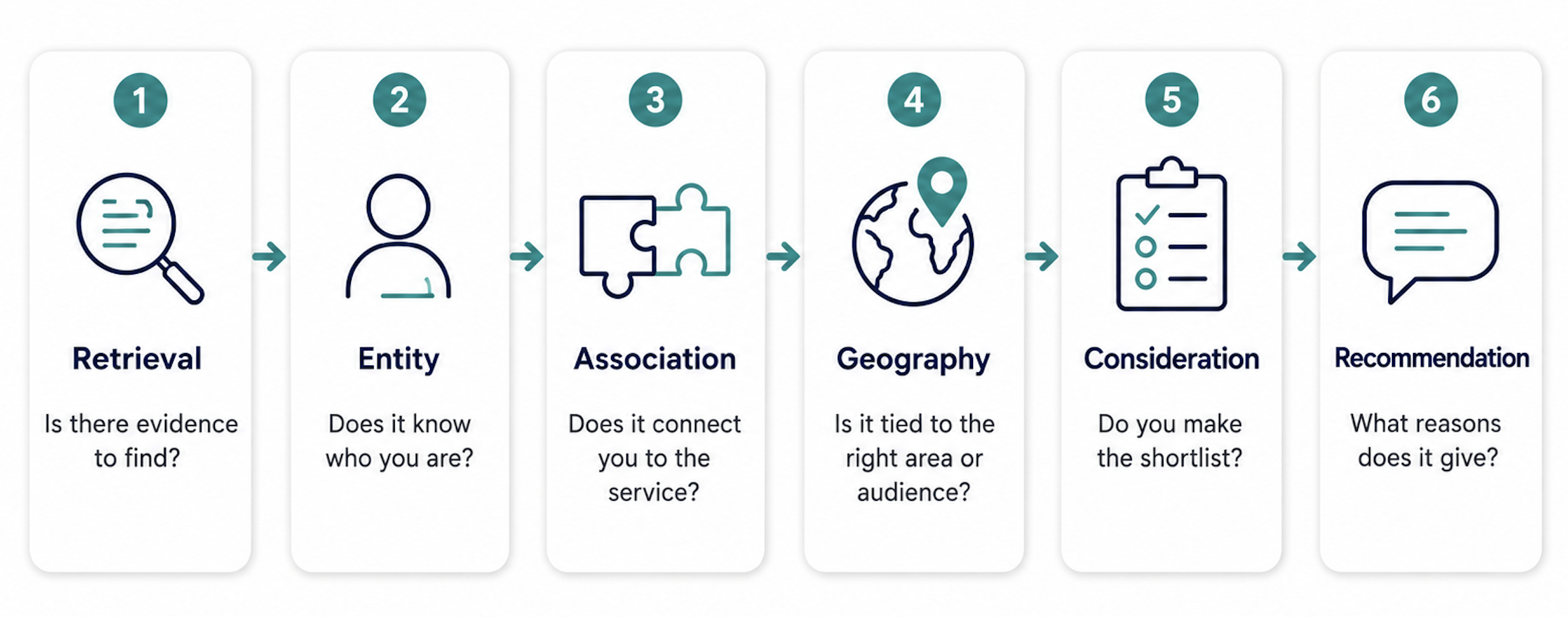
You can't control the AI answer. You can control what it has to work with.
AI interfaces will keep changing. Focus on the information and authority underneath them.
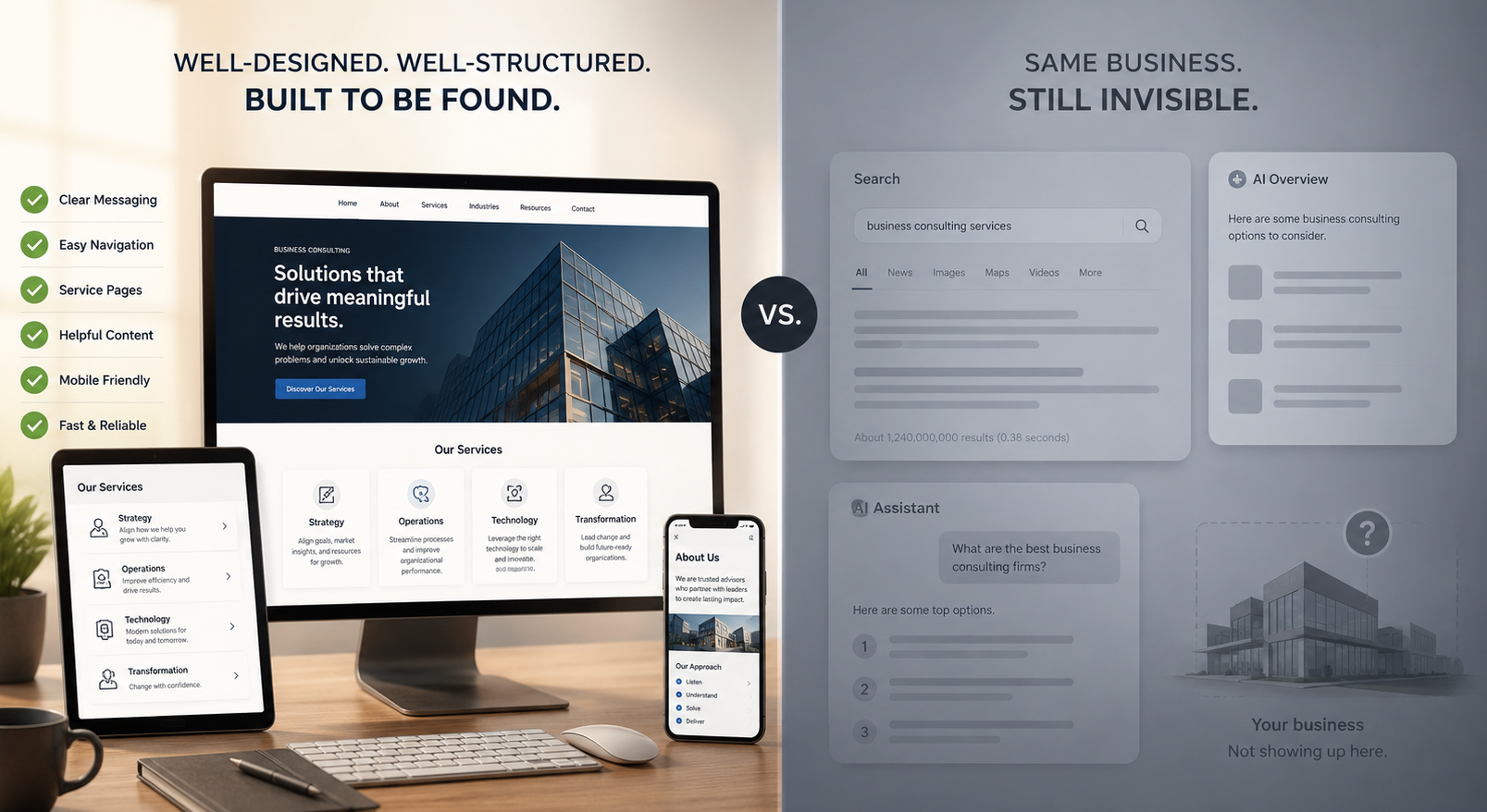
Not every visibility problem is a content problem.
A good website can still be invisible. Diagnose the layer that's actually limiting discovery before producing anything.